

Applying for LIS (Extra Help Part D) + Medicaid
Applying for LIS (Extra Help) and Medicaid
To apply for LIS (Extra Help) for a client, you can complete the application online at https://www.ssa.gov/medicare/part-d-extra-help. Filling out this application correctly not only applies for LIS (Extra Help) but also initiates the application process for Medicaid if the client qualifies. This dual application ensures that eligible clients can receive comprehensive assistance with their prescription drug costs and broader healthcare needs. This could make a huge difference for the beneficiary.
When filling out this form please ensure all client details are correct by reading off the questions aloud to your client.
If a client has been disabled for 24 months and paid at least 40 quarters in taxes they will be able to receive Medicaid, at any age.
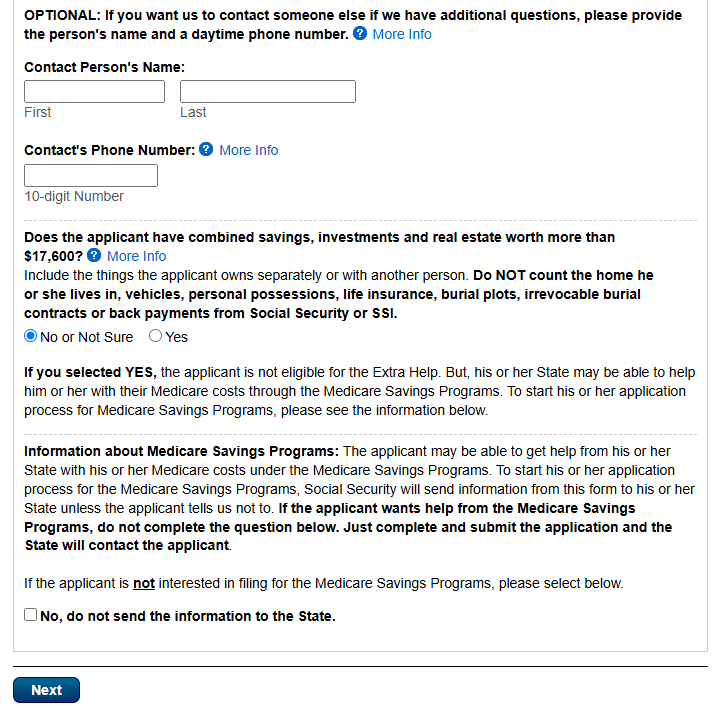
Note: During the Extra Help application you will find a check box for “No, do not send the information to the State”. Leave this box unchecked and it will automatically apply for Medicaid for the client. See the image below.
Applying for Medicaid
A beneficiary may also apply for Medicaid through their local Medicaid office or the Social Security Administration. You may instruct the client to contact their local office(s) for a paper application to be mailed to their address or to apply in person. Being familiar with these local offices is important when aiding a client in applying for these benefits. Understanding the specific procedures and requirements of local offices ensures a smoother application process and helps you provide accurate guidance and support to your clients. Additionally, each state may have an online portal in which you can submit an application online for a client.
D-SNP and Recertifying For Medicaid
Aiding in the application process for D-SNP (Dual Eligible Special Needs Plan) beneficiaries helps ensure that clients receive their maximum benefits. Assisting clients with their applications and understanding their eligibility guarantees they take full advantage of the comprehensive coverage and additional services available to them. Clients may occasionally lose their Medicaid status due to changes in income, residency, or other factors. To recertify for Medicaid, clients must typically reapply through their local Medicaid office or the Social Security Administration. This process involves providing updated financial and personal information to verify their continued eligibility. As their agent, staying informed about their status and assisting with the recertification process ensures they maintain their benefits without interruption.
Note: Depending on the scenario, the client may need to be moved to a non D-SNP plan temporarily or permanently until their Medicaid status is active again. If they gain eligibility for Medicaid again, ensure they gain access to their proper benefits.
Here’s your updated version, keeping your tone and structure but adding the new point clearly:
This step is crucial for clients who qualify for a DSNP (Dual Special Needs Plan) and are eligible for Medicaid!
Especially if they’re currently on their “best” plan — once they receive Medicaid, they may qualify for a higher-level DSNP with significantly more benefits.
But this is only possible if they have both Medicare and Medicaid.
Top agents take the time to help clients apply for Medicaid and secure the sale.
This shows the client how invested you are in their well-being — and they’ll never forget you for it.